
DIVE DEEPER
The story of Molasses Reef does not end at the surface.
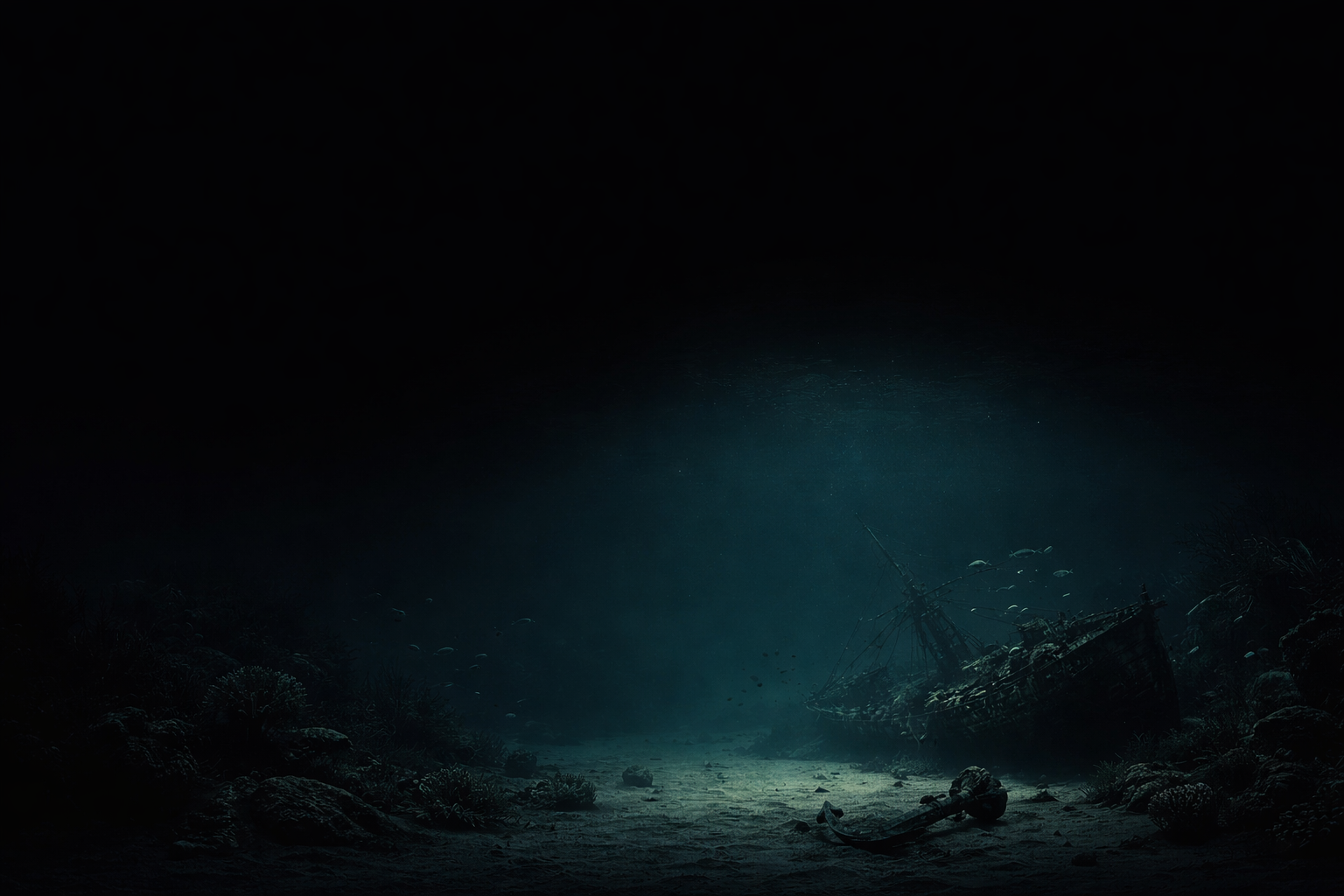
Beneath these waters lies one of the most significant underwater archaeological sites in the Caribbean — a place shaped by centuries of movement, encounter, and change. While each bottle reflects a moment drawn from that environment, the full story continues far beyond it.
For those who want to explore further, these resources offer a deeper look into the history, archaeology, and human stories connected to Molasses Reef.
THE MOLASSES REEF SHIPWRECK PROJECT
Turks & Caicos National Museum
https://www.tcmuseum.org/projects/molasses-reef-shipwreck/
The Molasses Reef Shipwreck Project represents one of the most important archaeological discoveries in the Western Hemisphere. Believed to date back to the early 1500s, this wreck is considered the earliest known European shipwreck in the Americas.
Led by the Turks & Caicos National Museum, ongoing research and excavation have revealed remarkable insights into early transatlantic exploration, trade routes, and shipbuilding of the period. Artifacts recovered from the site continue to shape our understanding of how these waters were first navigated.
This work forms the historical foundation of our tribute to Molasses Reef — not as legend, but as documented discovery.
THE TROUVADORE: A STORY OF SURVIVAL AND LEGACY
Turks & Caicos National Museum
https://www.tcmuseum.org/culture-history/slavery/slave-ships/trouvadore/
Among the wrecks associated with Molasses Reef, the Trouvadore carries a deeper human story.
Wrecked in 1841, this Spanish slave ship was transporting enslaved Africans across the Atlantic. Those on board survived the wreck and made their way to East Caicos, where their descendants became part of the cultural and historical fabric of the islands.
The story of the Trouvadore is one of resilience, survival, and continuation — a reminder that Molasses Reef is not only a site of maritime history, but of human experience.
This legacy is honored through Bambarra Trouvadore Rum, connecting past and present through a shared narrative.
ARCHAEOLOGICAL RECORDS OF MOLASSES REEF
Nautical Archaeology & Research Archives
https://shiplib.org/index.php/shipwrecks/iberian-shipwrecks/spanish-and-the-new-world/molasses-reef-shipwreck-c-1520/
Beyond museum collections, Molasses Reef is recognized globally within the field of nautical archaeology.
Detailed records and research archives document the structure of the wreck, the materials recovered, and the broader context of the site within early European exploration of the Americas. These resources provide a more technical perspective — one that reveals the reef not as an isolated incident, but as part of a wider network of movement, trade, and navigation.
They reinforce a simple truth: these waters were as important as they were unpredictable.
THE TURKS & CAICOS NATIONAL MUSEUM
For those visiting the islands, the Turks & Caicos National Museum offers a closer connection to the stories beneath the surface.
Exhibits include artifacts recovered directly from Molasses Reef, along with broader collections that explore the maritime and cultural history of the region. Through these displays, the reef becomes tangible — no longer abstract, but something that can be seen, studied, and understood.
It is here that the past comes into focus, piece by piece.
BELOW THE SURFACE
Molasses Reef is not defined by a single story.
It is a convergence of moments — of arrival, disruption, survival, and transformation. Some are documented through artifacts. Others through records. Others still through the people and culture that remain.
Each resource offers a different perspective. Together, they form a more complete picture of what lies beneath.
To explore Molasses Reef is to move beyond what is visible — and into what remains.